
By Abigail Mettry | Music Educator, Composer & Elementary Music Resource Creator
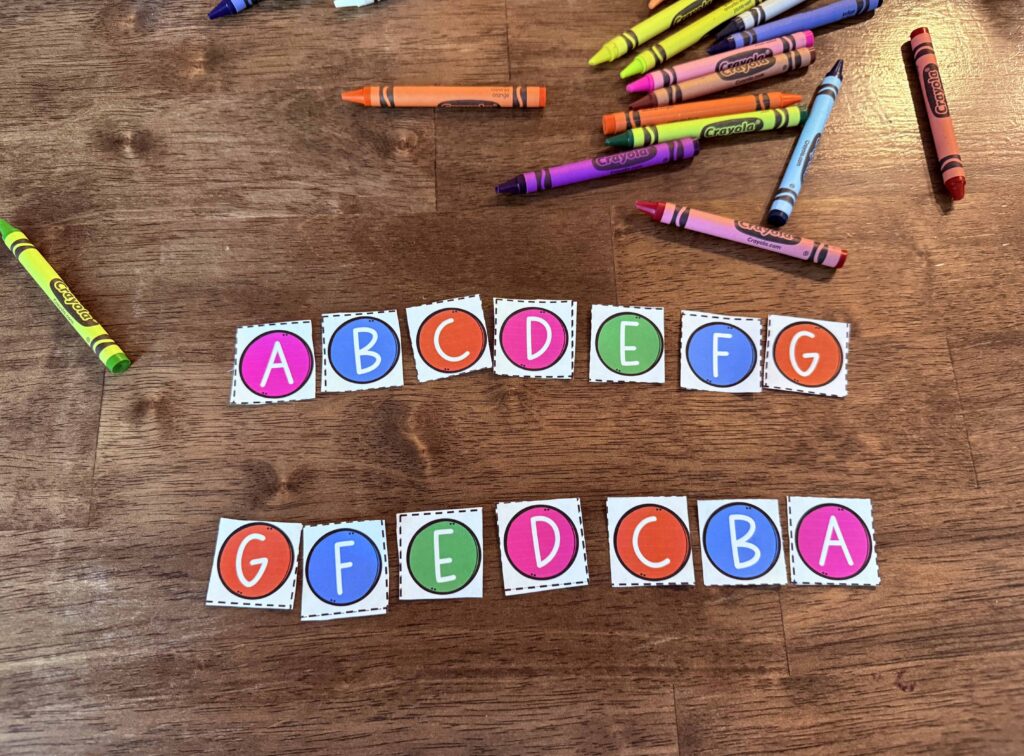
Learning to read music starts with understanding how notes move and how the music alphabet works. Music alphabet worksheets for beginners, including simple musical alphabet worksheet activities, help children learn the note names A–G, recognize when notes move up or down, and build early confidence before reading on the staff. These worksheets are designed for young learners, homeschool families, and elementary music students who need a clear, simple introduction to music note order. Used alongside listening, movement, and short practice activities, they create a strong foundation for future note-reading success.
What is the music alphabet?
The music alphabet uses the letters A, B, C, D, E, F, and G to name musical notes. After G, the pattern repeats starting again at A, moving higher or lower in pitch depending on the direction. When notes move upward on the staff or keyboard, the letters move forward in the alphabet. When notes move downward, the letters move backward. Understanding this simple pattern helps beginners make sense of written music before memorizing individual note positions.
How children learn the music alphabet
Children learn the music alphabet best when it is introduced gradually and reinforced through multiple senses. Effective music alphabet activities often include:
- Visual patterns, such as notes moving up and down on the page
- Saying or singing note names aloud to reinforce order
- Movement activities, like stepping higher or lower with the notes
- Short, repeated practice rather than long worksheets or drills
Worksheets work best when they support listening, movement, and hands-on music activities rather than replacing them.
Printable Music & Musical Alphabet Worksheets
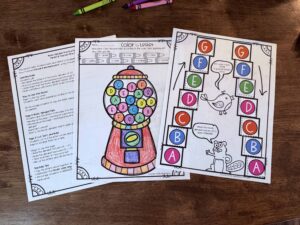
Printable music alphabet worksheets give beginners a clear, visual way to practice note order and understand how notes move. The most effective worksheets focus on simple patterns rather than memorization and are designed to be completed in short sessions.
Beginner-friendly music alphabet worksheets often include:
- Tracing or identifying the letters A–G
- Notes moving upward and downward to show alphabetical order
- Simple matching or coloring activities
- Clean layouts with minimal distractions
These worksheets are ideal for early elementary students, homeschool music lessons, and first-time music learners who need a gentle introduction to note reading.

How to use music alphabet worksheets
Music alphabet worksheets work best when they are used as a short, focused part of a larger music lesson. Rather than completing many pages at once, beginners benefit from brief practice paired with listening and movement activities.
Here are a few simple ways to use music alphabet worksheets effectively:
- Introduce the letters A–G before placing notes on the staff
- Say or sing the note names aloud while completing the worksheet
- Have students trace notes with their finger before writing
- Pair worksheets with keyboard, movement, or listening activities
Keeping practice short and positive helps students build confidence without feeling overwhelmed.
Ready for the next step?
Once your child understands the music alphabet, they’re ready to begin reading notes on the grand staff.
Grand Staff Adventure is a step-by-step interactive course that teaches note reading from the alphabet all the way to the full grand staff.

About the Author
Abigail Mettry is a music educator, composer, arranger, and pianist who creates engaging music resources for elementary classrooms and homeschool families. Her work combines music education with professional composing and arranging experience to help children build strong musical foundations. Learn more about Abigail.