
By Abigail Mettry | Music Educator, Composer & Elementary Music Resource Creator
Fall is the perfect time to bring classical music into the elementary music classroom. So many orchestral works have mystery, changing moods, dramatic instrumentation, and just the right amount of ‘spooky’ for this time of year.
They’re also perfect for teaching. Students can hear musical concepts like tempo, dynamics, timbre, orchestration, repetition, and mood clearly in the music, making these pieces easy to incorporate into your existing fall music lessons.
Here are six of my favorite classical pieces for fall, along with what to listen for, questions to ask your students, fun facts, and movie connections they may recognize.
1. Vivaldi — “Autumn” from The Four Seasons
You can’t have a list of fall classical music without Vivaldi’s Autumn! This famous piece gives students so many easy-to-hear musical elements to explore.
Vivaldi uses the music to depict an autumn celebration, dancing, and a hunt, making it a great introduction to program music and musical storytelling. Ask students to imagine what might be happening as they listen, then compare their ideas with the story Vivaldi intended to portray.
Listen for: The contrast between the solo violin and orchestra, changes in tempo and dynamics, and the different scenes Vivaldi creates.
Ask your students: What do you think is happening in the music? What do you hear that makes you think that?
2. Grieg — “In the Hall of the Mountain King”
This is one of my favorite pieces to use with young students because the musical changes are so easy to hear.
The mysterious opening immediately grabs their attention, while the repeating melody gives students something recognizable to follow. As the piece progresses, Grieg gradually increases the tempo, dynamics, and intensity.
That makes In the Hall of the Mountain King especially useful for teaching tempo, dynamics, crescendo, repetition, and orchestration.
Movie connection: Some students may recognize the melody from DreamWorks’ Trolls. The song “Hair Up” incorporates music from In the Hall of the Mountain King.
Listen for: The repeating melody, minor tonality, gradual crescendo, increasing tempo, and changes in orchestration as more instruments join in.
Ask: The melody keeps repeating—what does Grieg change to make the music more and more exciting?
3. Saint-Saëns — Danse macabre
Tell your students that at midnight, Death appears and plays his violin while skeletons rise from their graves and dance. You probably won’t have to work very hard to convince them to listen after that!
The prominent solo violin and xylophone give Danse macabre its unmistakably eerie character. This makes the piece a fun way to explore timbre, instrumentation, and how composers use musical sounds to create a mood.
The xylophone is especially fun to point out to younger students because its dry, percussive sound can suggest rattling skeleton bones.

Listen for: The solo violin and xylophone and the different ways Saint-Saëns creates a spooky atmosphere.
Ask your students: What instruments or sounds make this music feel spooky?
4. Mussorgsky — Night on Bald Mountain
If you want something dramatic for your fall music lessons, this is it!
Night on Bald Mountain depicts a wild supernatural gathering on a mountain. The music is filled with contrasts in dynamics, orchestration, mood, and intensity, giving students plenty to respond to as they listen.
This is also a great piece for a musical-imagination activity. Play part of the work without telling students its story and ask them to imagine that they’re hearing the soundtrack to a movie. What would be happening on the screen?
Movie connection: Students may recognize Night on Bald Mountain from Disney’s Fantasia, where it accompanies the dramatic Chernabog sequence near the end of the film.

Listen for: Sudden changes in dynamics, orchestration, and mood.
Ask: If this music were the soundtrack to a movie, what would be happening?
5. Saint-Saëns — “Fossils” from Carnival of the Animals
“Fossils” is short, playful, and especially fun for younger elementary students.
The xylophone gives the music its wonderful rattling-bones sound, but there’s another listening challenge hidden inside the piece: Saint-Saëns includes musical quotations that students can try to recognize.
One of the easiest for children to spot is the familiar melody of “Twinkle, Twinkle, Little Star.”
Fun fact: Saint-Saëns worried that Carnival of the Animals might hurt his reputation as a serious composer, so he restricted performances and publication of most of the work during his lifetime. “The Swan” was an exception. Today, Carnival of the Animals is one of his best-known works.
Listen for: The xylophone and familiar melodies hidden throughout the music.
Ask your students: Do you recognize any familiar tunes? Can you identify where you hear them in the music?
6. Bach — Toccata and Fugue in D Minor
Few pieces of classical music have become more closely associated with spooky scenes than the dramatic opening of Toccata and Fugue in D Minor.
The powerful sound of the pipe organ makes this an excellent opportunity to introduce students to an instrument they may not have heard on its own before. Have students listen to the enormous range of sounds the organ can produce and describe what they hear.
For older elementary students, you can also introduce the basic idea of a fugue, in which a musical idea enters and is then heard in different voices.
Movie connection: Disney used Toccata and Fugue in D Minor in the opening musical sequence of Fantasia. The piece also appears in Disney’s 20,000 Leagues Under the Sea, where Captain Nemo plays the organ aboard the Nautilus.
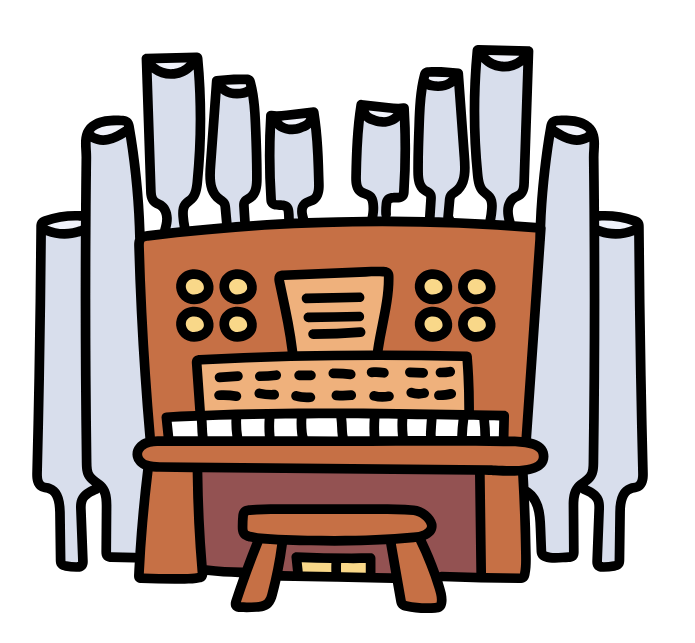
Listen for: The dramatic opening motif, the range of the pipe organ, and musical ideas that repeat and overlap.
Ask your students: What is it about this music that makes it sound spooky or mysterious?
Turn These Pieces Into Fall Listening Lessons
You don’t need an entire Halloween-themed lesson to incorporate seasonal music into your curriculum. Even a few minutes of focused listening at the end of class can give students an opportunity to practice identifying tempo, dynamics, timbre, instruments, mood, and other musical elements in real music.
Try choosing one piece each week and giving students one specific element to listen for. You can also have students respond through movement, drawing, discussion, or a written listening response.
If you’d like something ready to print and use, I’ve also created elementary music listening activities for many of these pieces, plus Flight of the Bumblebee. The activities give students a structured way to listen and respond while learning about the composers and musical elements they hear.
You can find the ready-made worksheets in my Wildflower Music shop or on Teachers Pay Teachers.
These pieces work especially well in September and October, but most can be used throughout the year whenever you need an engaging way to introduce classical music and orchestra listening to elementary students.

About the Author
Abigail Mettry is a music educator, composer, arranger, and pianist who creates engaging music resources for elementary classrooms and homeschool families. Her work combines music education with professional composing and arranging experience to help children build strong musical foundations. Learn more about Abigail.